Check it out
Writing website copy: how to make your offering clear
You know exactly what your business does. But try explaining it on your website to someone who has never heard of you. Before you know it, you're talking about quality, personal attention and innovative solutions. All fine. Your visitor still doesn't know what they can come to you for, though.

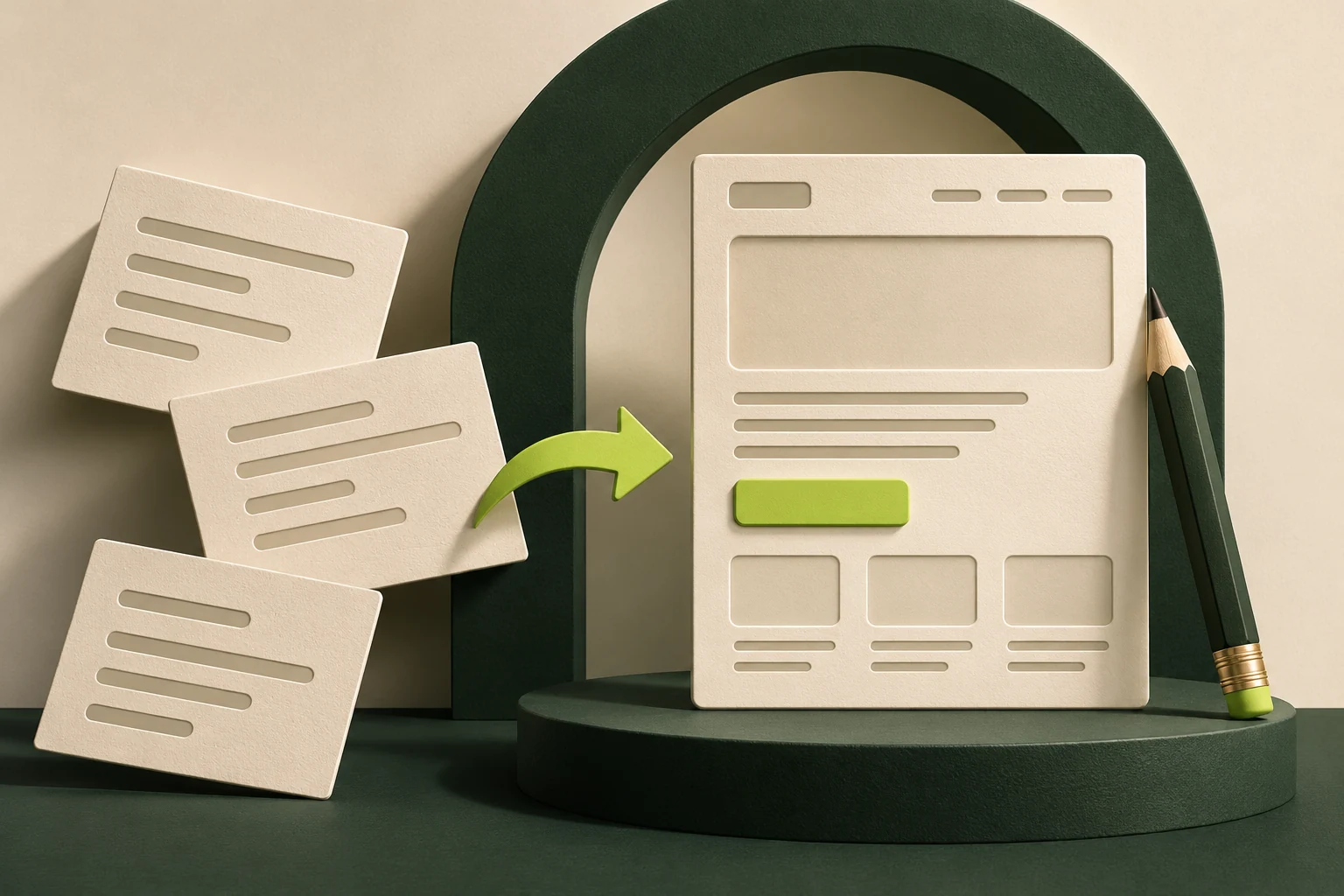
Good website copy helps someone make a decision. Does this fit my problem? Do these people understand my situation? And what can I do if I want to find out more? Concrete answers give you a much more useful starting point than a page full of impressive words.
Start with the question someone arrives with
Pick one page, such as your main service. Decide who lands there and what they're trying to work out. A director who wants to replace the company website has different questions from an employee who just needs to change an image.
Describe the situation as specifically as you can. For example: our website no longer reflects the business, but we don't yet know what needs changing. From there, you can explain what you investigate, what you build and which decisions the client needs to make.
Use the words from real enquiries and conversations too. You don't have to copy your internal name for a service. If you need to explain the name first, it may not be the most useful opening.
Give each page a job
Your homepage provides an overview. A service page helps someone evaluate a specific solution. A case study shows how a problem was approached in practice. Those pages don't all need to tell the same story.
For a service page, I'd start by writing out these five things:
- The situation: which problem or goal does this service address?
- The offering: what exactly do you build, arrange or improve?
- The approach: how does the project work and what does it require from the client?
- The evidence: which real examples support your explanation?
- The next step: what can someone do and what happens afterwards?
This is an order for working on your copy, not a mandatory design with five blocks. Sometimes an example needs to appear early. Sometimes the visitor first needs to know whether you can work with their existing systems. Let the content guide the structure.
Turn a broad promise into a recognisable offering
A hypothetical example. Say you provide staff scheduling software. Your first draft says: ‘We offer innovative solutions that help ambitious organisations work more efficiently.’ That could still mean quite a few things.
A more specific version would be: ‘Manage staff schedules in one place. Employees share their availability, planners assign shifts and the team can see any changes.’
Now someone understands what happens and who the software is for. Of course, you should only publish this if the product actually does those things. A more specific story that isn't true doesn't help anyone.
You can then explain what sets your product apart. Perhaps it's how shift swaps are handled or how the schedule connects to an existing system. Choose what matters to your customer. Everything doesn't need to fit into the opening paragraph.
Put evidence close to your promise
If you say customers can manage something themselves, show what they can actually change. A short explanation or relevant image can be much clearer than the word ‘user-friendly’.
A case study helps when the situation is recognisable. Describe the problem, the decisions made and the result you can substantiate. A client quote works too, provided it's real and you have permission to use it. If you don't have figures, you don't need to invent any.
For a B2B offer, your contact may also need to share that evidence internally. Consider which information on a B2B website helps people make a decision together.
Pay attention to what the evidence actually supports. A finished visual shows the design. It doesn't prove that revenue increased. Keep those things separate.
Write headings that tell people something
Read only the headings on your page. Do they give you a reasonable idea of the offering? ‘Our solution’ says very little. ‘Plan shifts and manage changes in one place’ gives direction, provided that's what the section explains.
Keep paragraphs as short as they need to be, but don't put every sentence on a separate line. Readers need to follow your explanation. Technical language is fine if your audience uses it; explain unfamiliar terms where they become relevant.
And write as you would explain something to a client. ‘You can update the content yourself’ is easier to read than ‘an independently manageable content environment’. You don't need complicated words to demonstrate expertise.
Use keywords to keep the question clear
Knowing what people search for helps you decide which question the page should answer. Use the main term naturally in the title and explanation. A service page about website maintenance can simply say it's about website maintenance.
That doesn't finish the job. People also want to know what's included, what they handle themselves and when they need help. Repeating the same keyword ten times doesn't answer those questions. Avoid creating a new page with almost identical content for every small variation of a phrase.
Let copy and design work together
Squeezing a long explanation into a small text box rarely makes it better. Use real content as you build the page. That shows you whether a comparison, example or short explanation needs more room.
For a new website, you can already collect the customer question, offering, available examples and intended next step for each important page. That's useful input for your website brief. You don't need every word signed off before starting the conversation.
Check whether someone can explain your offering back to you
Ask someone from your target audience to read the page. Then ask what they think you do, who it's for and what the next step would be. Don't give them the answers first. If you have to add an explanation, that information may be missing from the page.
After publication, look at the enquiries that actually come in. Does the same confusion keep appearing? The copy still needs work. To investigate more broadly where visitors get stuck, read how to investigate and improve website conversion.
Start with one important service page. A clear offering, a relevant example and an understandable next step make a useful first improvement. Working on a new website and struggling to get that story together? Tell us where you're getting stuck. We can look at how the content, design and experience need to work together.