Check it out
A ticket shop on your own website: an embed or a custom branded experience?
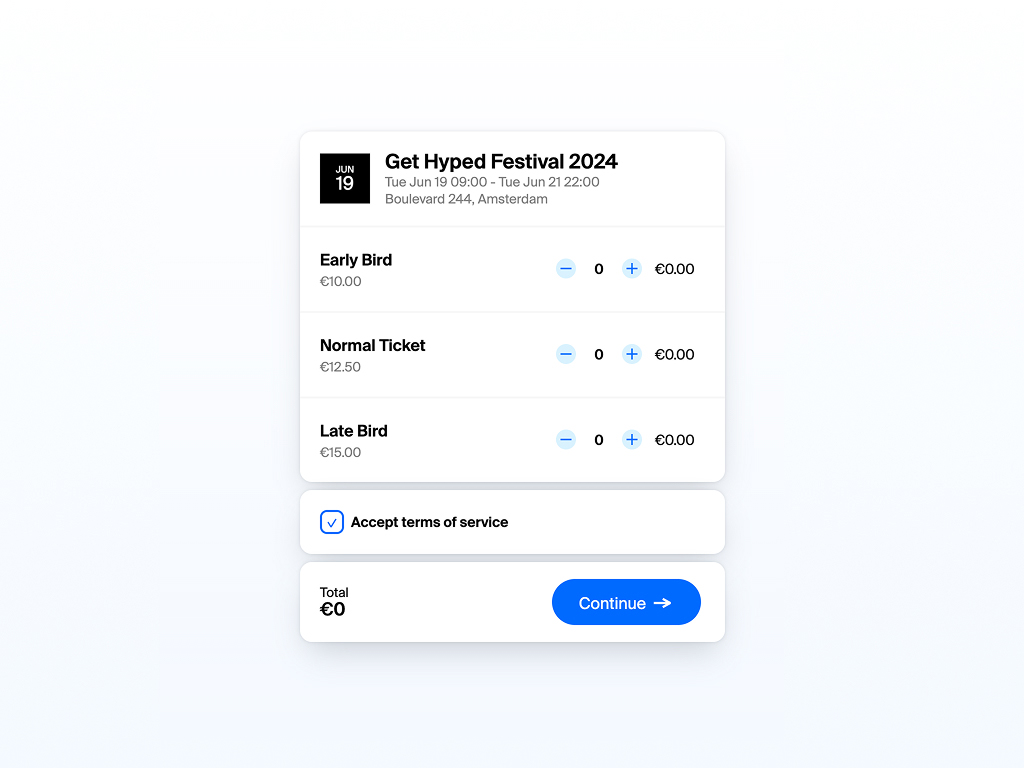
You want people to buy a ticket directly on your festival website. Often, your ticketing partner's embed makes that fairly simple: a piece of code that puts the shop on your site. Useful, but it does not automatically give you control over the entire design.

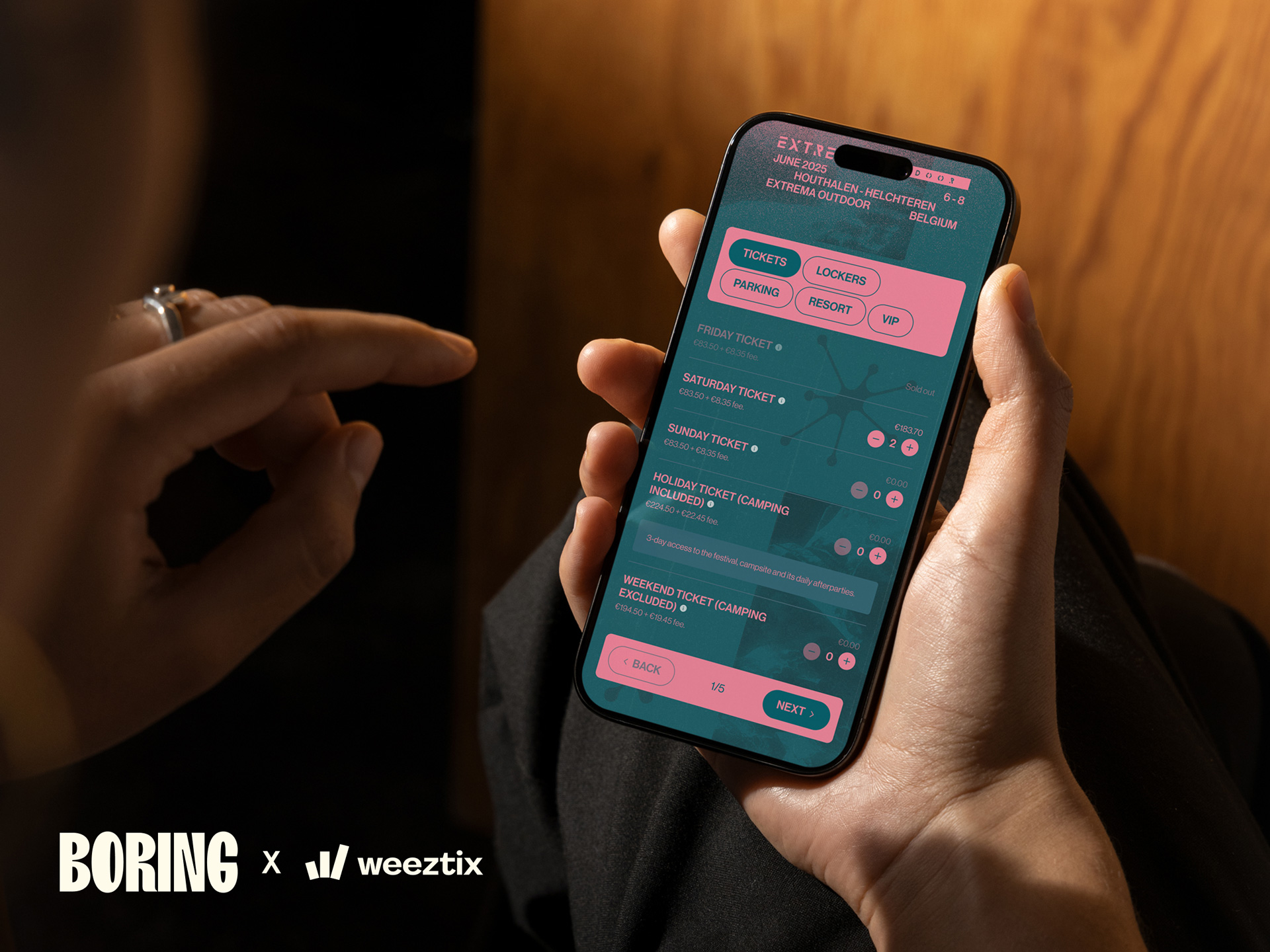
A standard embed can work perfectly well. Do you want the buying experience to feel like part of your festival, or help visitors through the choices in a different way? That is where a custom shop gets interesting. Start with what you want the ticket shop to achieve.
How do you embed a ticket shop?
First set up the shop with your ticketing partner, then use their official website integration. Weeztix explains this in its guide to integrating a ticket shop (in Dutch).
Put the shop on a clear ticket page and try the entire journey on your phone. Does it display properly? Can you choose tickets and quantities, add extra products and pay? Simply checking that the shop appears on screen is a little too easy.
Use the provider's code. Putting a separate sales page inside an arbitrary iframe yourself can cause problems with payments, tracking or display. Better to find that out before sales open.
What does a standard embed do well?
A standard embed is straightforward to set up. The ticketing partner provides the sales features and manages important parts of the process. You can focus on ticket types, communication and the event.
If that buying journey works for your audience and the available styling fits well enough, it can simply be the right choice. Custom work should add something.
Also look at how the shop works within the page. Is the ticket button easy to find? Does the shop have enough space? On mobile, do you end up scrolling inside two different windows? You notice these details immediately when you try buying a ticket yourself.
What does a custom branded shop add?
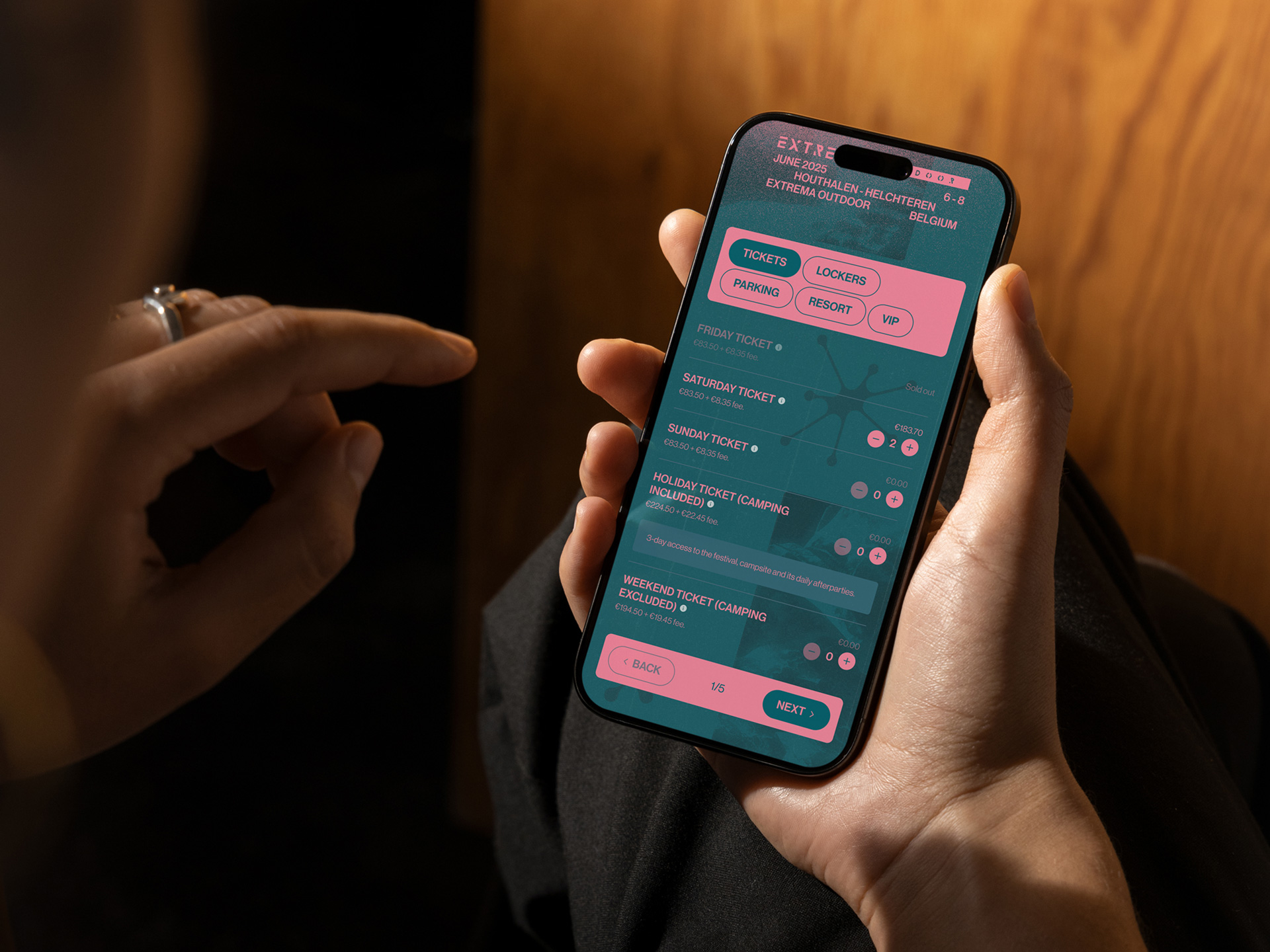
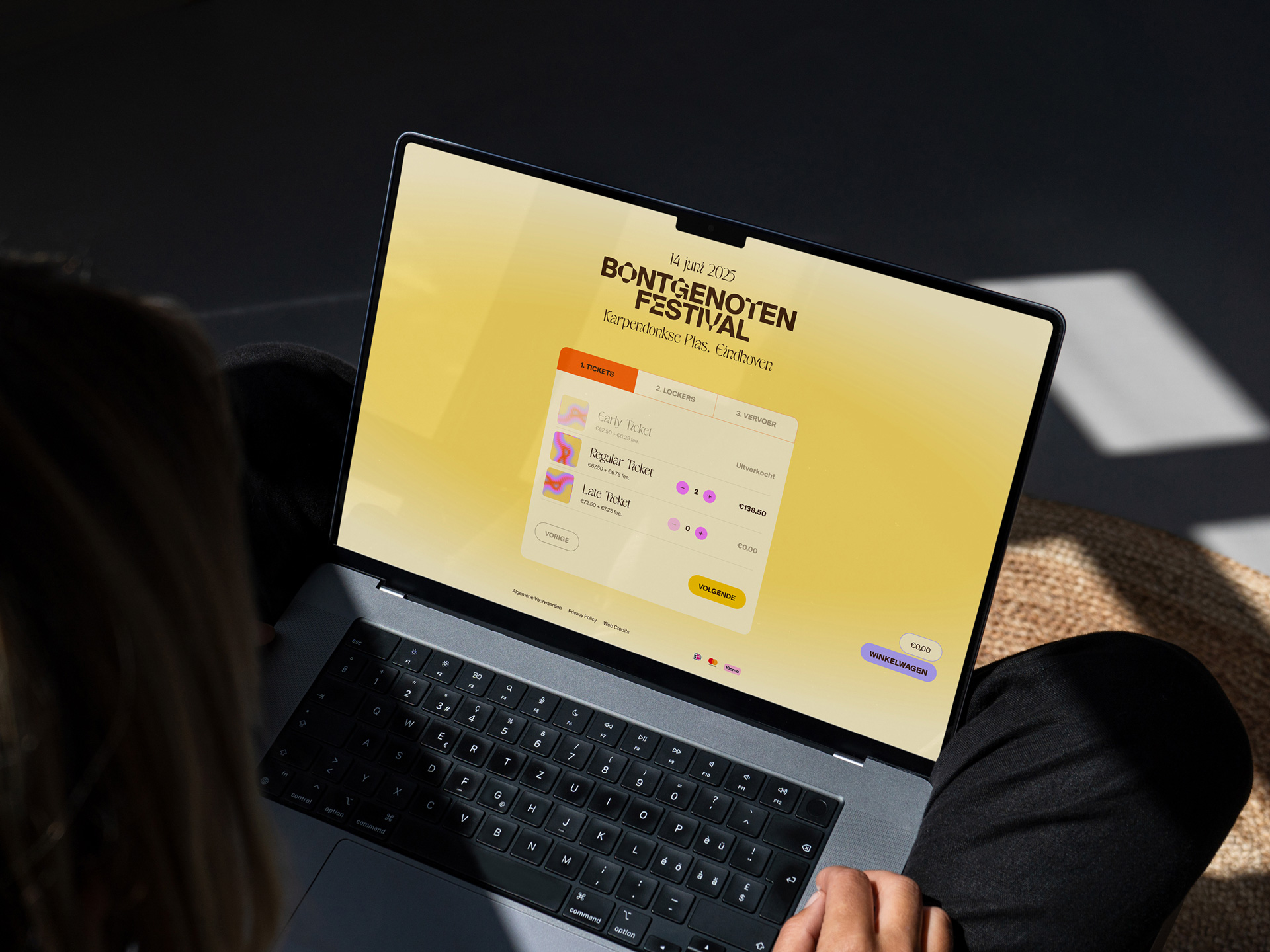
A custom ticket shop lets you make its appearance and controls a much closer part of the festival. Typography, colours, explanations of ticket types and the way extra options appear: you can make your own choices.
At BORING, this started while we were building the website for By The Creek. Together with Weeztix, we explored how the ticket shop could share the festival's visual identity. We developed the custom shop further from that collaboration.
In our earlier case study, we described that experience after more than 400,000 tickets had been sold. Quite a few. That shows the scale at which the shop was used; claiming a conversion increase would require a separate measurement of what the custom design changed.
A distinctive design still needs to be easy to use
A bold design is great as long as people understand what they are buying. What is the difference between ticket phases? Is that extra option compulsory? What will the final price be? You do not want to hide those answers.
I would always prioritise the most important explanations. A striking button will not remove doubts about age restrictions, transport or access. Visitors first want to know they are choosing the right ticket.
Clear labels, a recognisable confirmation and an easy way back to the previous choice are part of the brand experience too. The shop should feel good to use at exactly those practical moments.
Decide what you want to measure beforehand
A shop on your own domain does not automatically mean every step is measured correctly. An embed, an external payment step and consent settings can affect that.
Decide which steps to track: ticket page visited, shop opened, ticket selected, checkout started and purchase completed. Discuss with the ticketing partner which data is available and which system records confirmed sales.
A click on the payment button is not a sold ticket. Check how test orders, cancellations and returning visits appear in reporting too. Otherwise, it is easy to draw conclusions from the wrong numbers.
Discuss peak traffic before sales open
When a popular sale starts, things can get busy very quickly. Agree beforehand who manages the website, integration and ticketing environment, and who will be available at that moment.
Test the journey and make sure everyone knows what happens if something goes wrong. Our case study about 14,000 tickets in one hour describes how a custom ticket shop was used during one such peak. For your own event, agree the expected traffic and capacity afresh.
Which approach should you choose?
A standard embed is a good starting point if the flow works for your audience and you have few additional requirements. Want a stronger brand experience, better explanations or a different buying journey? Then a custom shop is worth exploring.
Make sure someone oversees the whole experience. Visitors do not think about which part belongs to the ticketing partner and which part belongs to the web agency. They just want to buy a ticket.
Curious about the possibilities for your festival? Discuss your ticket sales journey with BORING. We will look at what can improve with the existing tools and where a custom shop adds value.