Check it out
Webflow Analyze or GA4: which insights does your marketing team need?
Adding another dashboard will not automatically improve your marketing. You mainly want to know which pages help, where enquiries come from and what to improve next. Start with those questions.

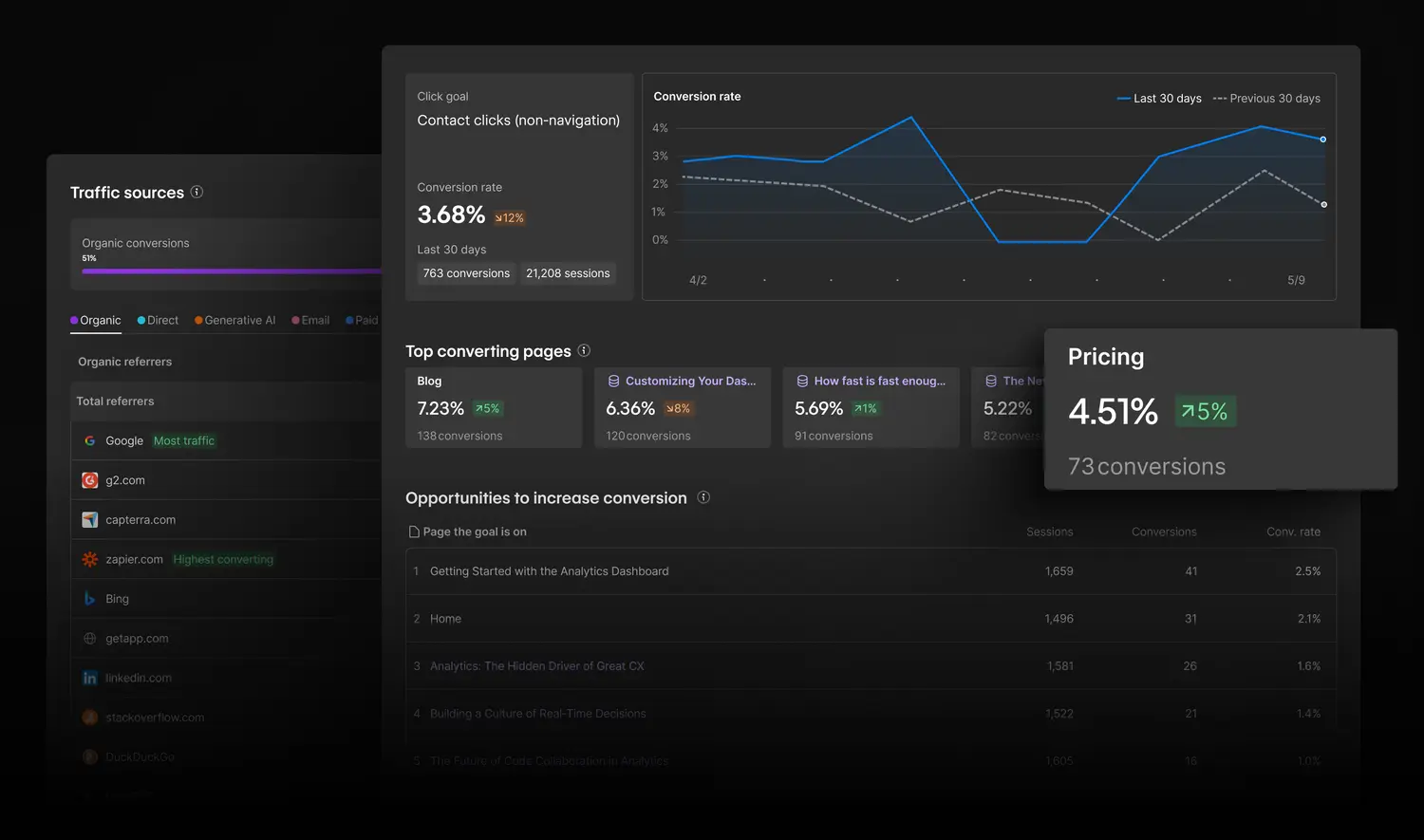
Webflow Analyze and Google Analytics 4 can both be useful, but they do not always serve the same need. Which insights do you need, and who will work with them? I think that is a better starting point than choosing the tool with the most options.
What does Webflow Analyze offer?
Webflow Analyze lets you view website data inside Webflow itself, including traffic, pages and configured goals. That can be convenient if your team already manages the website there.
According to the Webflow Analyze setup guide, Analyze is a paid add-on. You need to configure tracking settings and publish the website before the intended data is collected. Simply enabling it and assuming everything is correct is a little too easy.
Mainly want to see how important pages perform? An accessible place alongside the CMS can work well. Try answering your team's recurring questions with it.


When is GA4 relevant?
GA4 becomes interesting when website analytics is part of a broader measurement setup. For example, when you want to define events carefully and investigate how they relate to campaigns.
One concrete example is the integration between GA4 and Google Ads. It lets you use data across those environments. Its value depends on your campaigns and how measurement is configured.
Those extra capabilities need managing. Who checks events, integrations and reports? An extensive dashboard where nobody really understands what is being counted does little for the team.
What do you actually call a conversion?
A click on contact is not a submitted enquiry. An enquiry is not yet a qualified lead or a new customer. First define the step you want to track.
Analyze offers different goal types, including clicks, page views and custom events. Choose the one that matches your question and test whether it records what you intend.
If you want to count completed enquiries, use a confirmed event where possible. If you only measure the preceding click, call it a click. Otherwise, your dashboard can quickly look more successful than the actual process.


Do not compare systems without definitions
If you use Analyze and GA4 together, their numbers may differ. First check the period, definitions, filters and tracking settings. A difference does not immediately prove one tool is wrong.
Briefly document what you mean by a visit, goal and enquiry, and which source you use. Add CRM information to assess commercial results. That is where you see what happens after the form.
Assigning a monetary value to a goal? Keep that estimate clearly separate from actual revenue. A value entered in a field is not a paid invoice.
Configure tracking deliberately
Analyze has different tracking settings, including opt-in and opt-out options. Make sure they fit your website and how visitors can express their preferences.
The tool's name does not tell you whether everything is properly arranged for your situation. Have the person responsible for privacy and measurement determine the required setup and information.
Then test what actually happens before and after a visitor makes a choice. The technical behaviour should match what you agreed and explained.
Choose what your team will actually use
Take the questions you want to discuss in a monthly website meeting. Which figures do you need to answer them, and who investigates a noticeable change?
Analyze can fit well if you want the necessary website insights directly in Webflow. GA4 deserves attention when the broader measurement setup and its connection to Google Ads matter. Using both can work too, as long as each has a clear purpose.
What matters is what you do with the insights. Discuss website analytics and conversion optimisation with BORING. We will look at which data you need to make focused improvements to your website.