Check it out
Why Webflow? Benefits, limitations and CMS management for marketing teams
Publish a new case study, update a campaign page or replace that outdated copy. As a marketing team, you should be able to do those things yourself. Yet on many websites, the first step is still a request to a developer. And then the waiting starts.

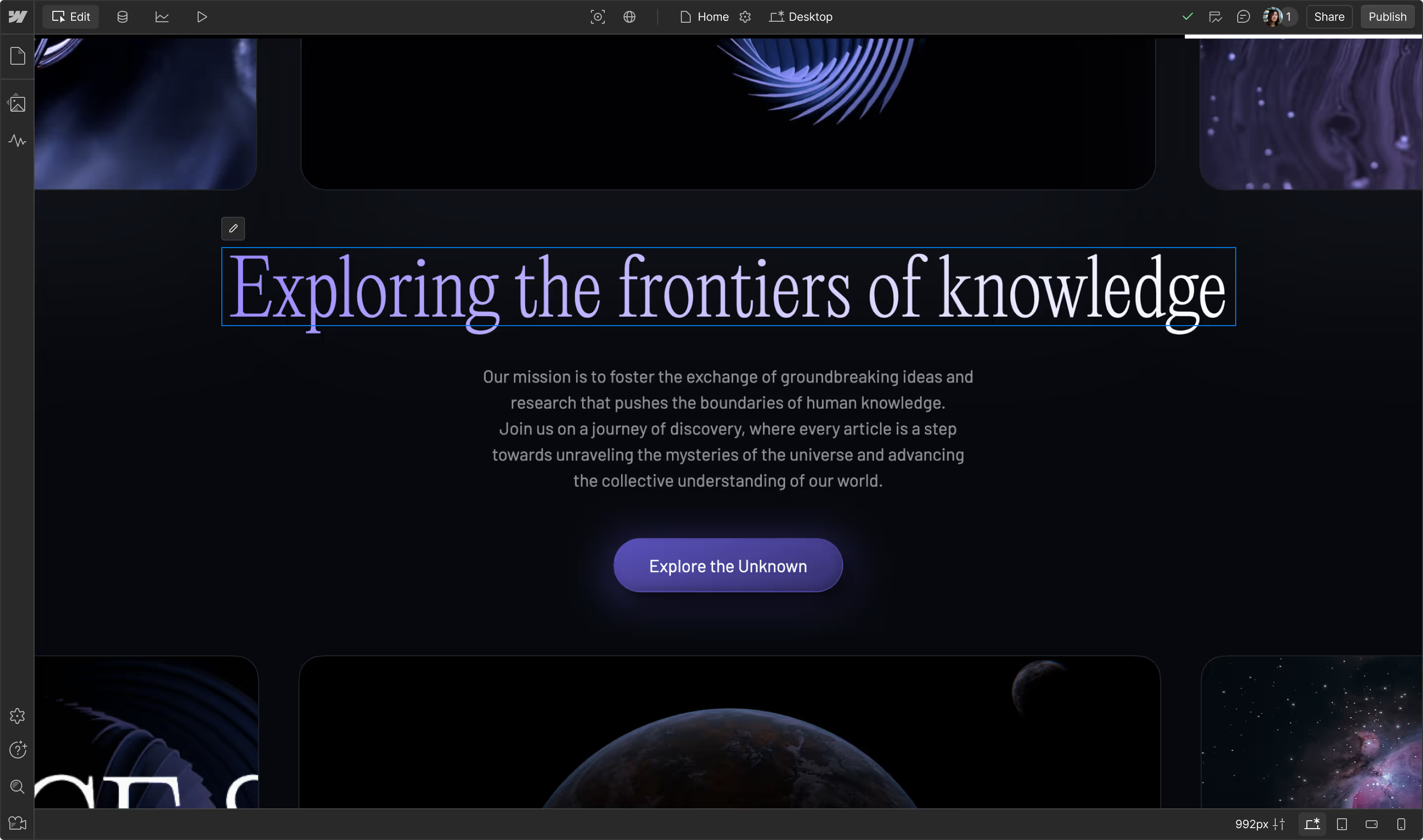
This is where Webflow can make a real difference. Your team gets more control over content while the website stays true to your brand. But choosing Webflow isn't enough on its own. It needs to be set up properly. Here's what I'd look at.
What is Webflow?
Webflow lets you visually design, build and manage websites. Recurring content, such as blogs, case studies and team members, lives in CMS collections. Think of a consistent structure with fields you fill in. The design is already there, so a new case study doesn't need a new page design.
That works well when the fields match the story you want to tell. A CMS can be technically sound and still be awkward for a marketer. Start by understanding what your team needs to publish good work.

Why do marketing teams choose Webflow?
What I like about Webflow is how closely design and content sit together. You see your copy in the website. A heading that runs over three lines or an image that crops badly becomes obvious straight away.
You can also use components: reusable building blocks for your pages. A large opening image, a customer quote, results or a contact section, for example. When they're built well, you can assemble a campaign page from elements that already match your brand. That saves a lot of starting from scratch.
The CMS works similarly for case studies and blogs. Fill in the agreed fields and the page uses the existing structure. Much clearer than copying an old page and hoping you haven't left the previous client's name somewhere.

Who edits content, and who builds pages?
Those are different tasks. Agree who can change copy, who can assemble pages and who can publish. It may sound like a practical detail, but it determines how independently your team can work.
A Content editor can update text, images and CMS content without changing the design. A Marketer can build pages using prepared components. The Designer works on the underlying design and structure. Access and publishing permissions depend on your setup and plan.
The documentation for content editors also explains the limits of that role. Being able to change copy doesn't mean you can edit custom code or rearrange the whole page. Show the tasks your team needs to do before you choose a setup. That's more useful than a long feature list.

What does good CMS management look like?
Take a client case study. You want space for the client, the challenge, your approach, the result and strong imagery. You may also want to link it to a service. Plan that upfront, and nobody has to work out where everything belongs each time.
Publishing then becomes straightforward: enter the content, review the preview and check mobile. Ask a colleague to check names, quotes and results claims. The person with publishing access can then put the case study live and check the page.
Your team can handle the daily work with clear publishing responsibilities. At BORING, we build the components that make this possible and show you how to use them during handover. A CMS should make your team's job easier. Otherwise, what's the point?
What are Webflow's limitations?
You still need someone to build the website properly. A visual tool won't fix a confusing content structure for you. Specific filters, integrations or interactions can still require development.
You're also choosing the platform's plans and limits. How much content, how many languages and how many users do you need? Which other systems must connect to it? Check those things early. Comparing hosting prices alone gives a pretty narrow picture.
If you need lots of specialised application features, another solution may fit better. And if your current WordPress website works well and is properly maintained, switching isn't automatically an improvement.
When does Webflow fit your organisation?
For a marketing website with a distinctive look, regular new content and a team that wants to manage things itself, I think Webflow is a strong option. With a setup that fits the work you do.
My advice: ask for a demonstration of three everyday tasks. Publish a case study, edit a service page and create a campaign page. Use the roles your team will actually have. You'll quickly see whether the system works for you.
Wondering whether Webflow fits your team? Discuss your website with BORING. We'll look at your brand, your content and, above all, what your team wants to do independently.